
Practical Completion Inspection (Brick Veneer / Timber Frame)
Identify every outstanding defect and unfinished item before you sign off at handover, your key negotiating position.
- Same-day report (subject to access and availability)
- Upfront pricing
- 12 months free advice

What's in your practical completion inspection
Included
- Driveway, paths and steps
- Fences, retaining walls and surface drainage
- Landscaping and letterbox
- Pergolas, decking and sheds
- Doors and windows, operation, hardware, seals
- Facia, barge boards and eaves
- Roof cover, gutters and downpipes
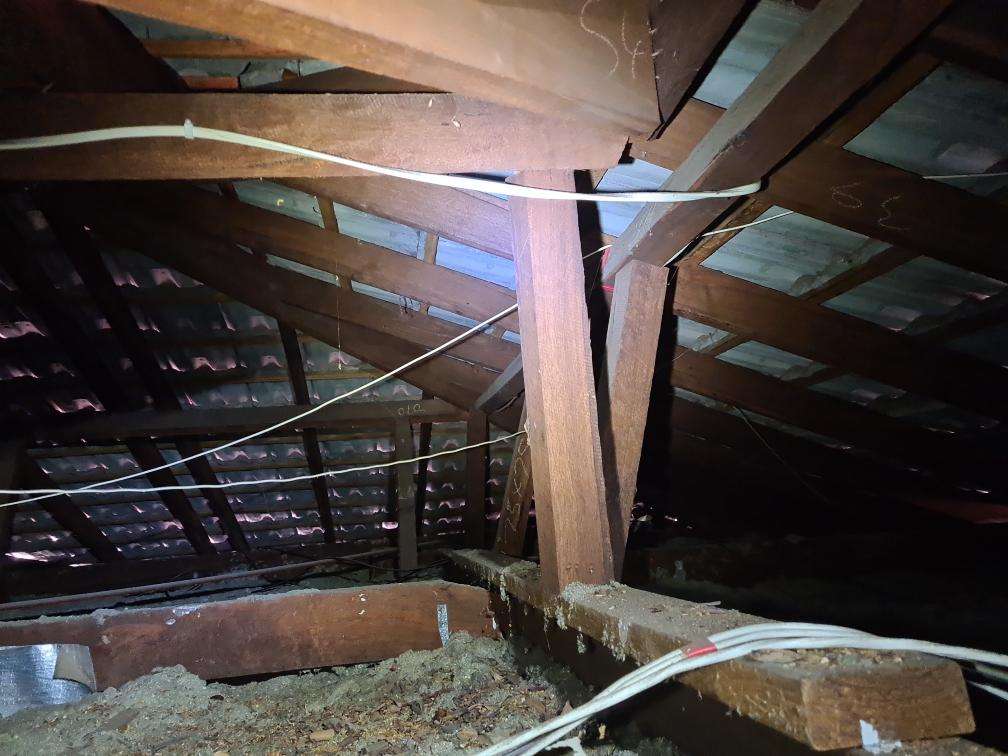
- Roof cavity, accessible areas inspected from the manhole
- Plumbing drains, taps and toilets
- Cabinets, vanities, mirrors, shower screens and baths
- Kitchen appliances, tested where power is connected and appliances are accessible
- Appliances, lights and air-conditioning, tested
- Vents, skylights, insulation and sarking
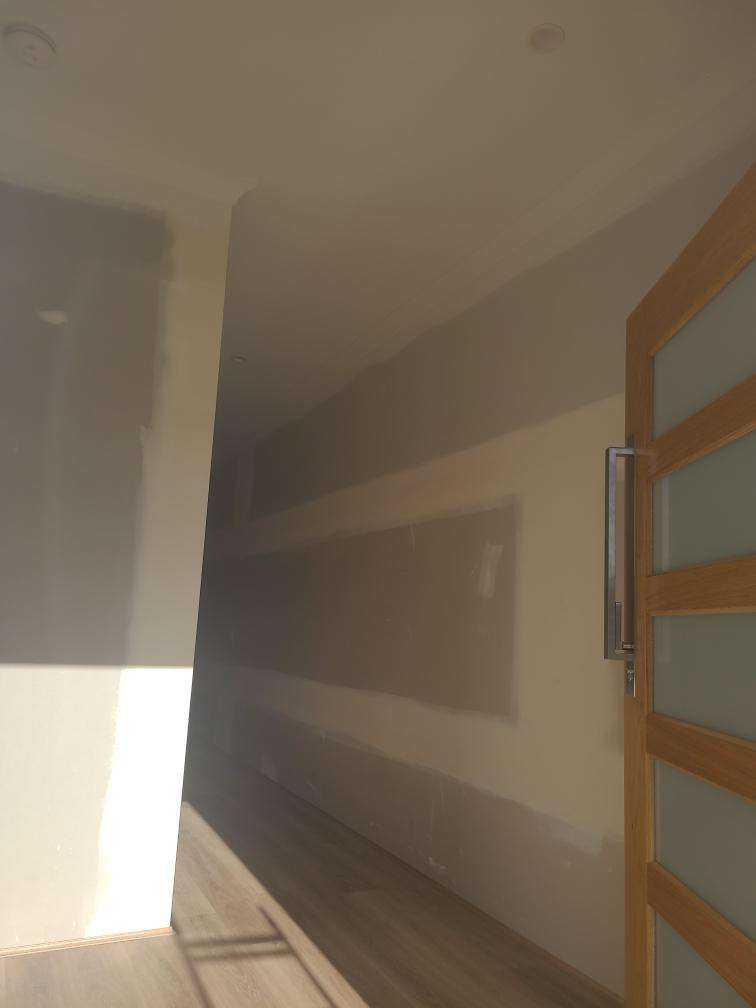
- Wall and ceiling paint, defects and quality
- Polarity testing to all power points
- Termite treatment verification
- Same-day written report with photo evidence
Not included
- Structural assessment of the building
- Timber pest inspection
- Engineering certification
- Areas not accessible or not yet completed by the builder

Our inspectors document every accessible element on site with photo evidence and severity ratings.
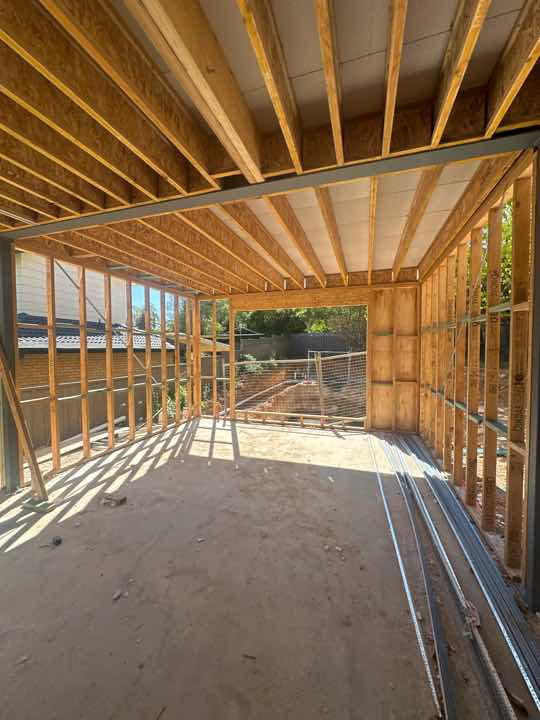
Real defects our inspectors have flagged
Why you might need this
- Builder has called 'practical completion' and is requesting handover, you need an independent assessment first
- First time building a new home and want expert eyes before signing off
- Remotely located investor who cannot attend handover in person
- Building contract gives you one opportunity to reject defects before you accept the property
- PCI list from builder is incomplete and you need your own independent defect list
Stage pricing is confirmed at booking. The fee depends on the build stage, site access, and inspection scope. Use the guide price in the header as a starting point, then book online to confirm your quote.
The build sequence
Where this inspection sits in the build
Every stage inspection has a right moment. Here is the full sequence, with this inspection highlighted and when to book each of the others.
Stage 6 of 8 This inspection
Practical Completion Inspection
Once the property is fit for occupation
- When to book
- Book as soon as your builder gives you the PCI date and time.
- Why it matters
- Defects documented at PCI are contract corrections. Miss them and they turn into warranty disputes.
View full 8-stage build sequence
-
- When to book
- Book as soon as your builder confirms the pour date. We inspect one to two days before the trucks arrive.
- Why it matters
- Once concrete is poured, the formwork, footings and reinforcement can never be checked again.
-
- When to book
- Book once the pour date is locked in. One visit covers the pre-pour check and the pour itself.
- Why it matters
- The one chance to check the slab while it is being placed, not after it has set.
-
- When to book
- Book for two or more days after the pour, before your builder starts framing or brickwork.
- Why it matters
- Once the walls go up, nobody can check the slab set-out or catch early cracking.
-
- When to book
- Book the day framing finishes, before any roof cover, cladding or plasterboard goes on.
- Why it matters
- Bracing, tie-downs and lintel sizing can only be checked now.
-
- When to book
- Book once the building is sealed and lockable: roof on, external doors and windows in, before internal fit-out begins.
- Why it matters
- Your last look at flashings, brick ties and waterproofing before the linings hide them.
-
Stage 6 of 8 This inspection
Practical Completion Inspection
Once the property is fit for occupation
- When to book
- Book as soon as your builder gives you the PCI date and time.
- Why it matters
- Defects documented at PCI are contract corrections. Miss them and they turn into warranty disputes.
-
- When to book
- Book once the builder confirms the PCI defect repairs are finished.
- Why it matters
- Independent confirmation that every PCI item was actually fixed before you accept the keys.
-
- When to book
- Book in good time before your warranty period closes. Your builder or contract sets the exact window.
- Why it matters
- The last window to put settling and movement defects back on the builder before the warranty closes.
The process
- 1
Book before your handover date
Book the PCI 1–2 weeks before your scheduled handover. Your builder will advise you of the practical completion date, book as soon as that date is confirmed. The inspection must occur while you can still reject defects under the building contract.
- 2
Inspector assesses all fixtures, fittings and finishes
Your SURE inspector systematically works through every room and all external areas, testing appliances, checking finishes, and assessing all items listed in the scope per AS 4349.0.
- 3
Same-day report delivered
A comprehensive defect report with photos, location references, and a prioritised list of outstanding items is delivered the same day.
- 4
Use the report at handover
Your report gives you documented grounds to require rectification before settlement. SURE inspectors can answer questions during the 12-month free advice period.
See exactly what you get before you book
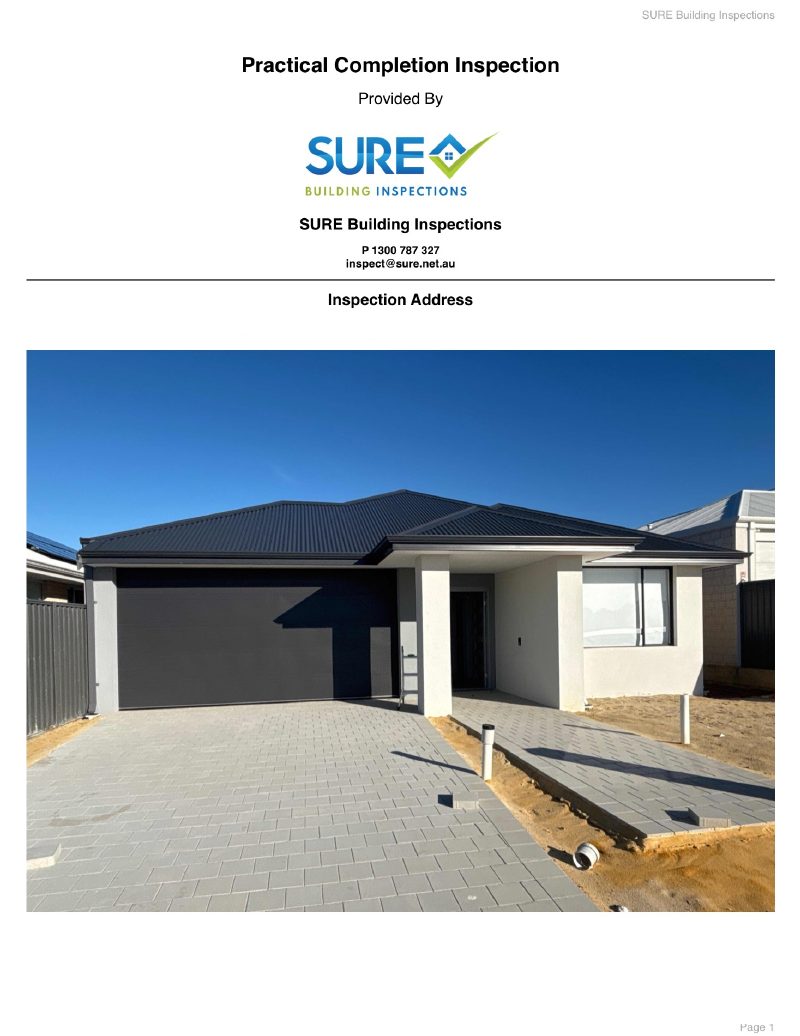
Our practical completion inspection (brick veneer / timber frame) report includes annotated photos, severity ratings, AS 4349 references and actionable remediation advice. Written in plain language so you can act on it the day you receive it.
- Photo evidence per finding
- Severity rated: critical, moderate, cosmetic
- Australian Standards cross-referenced
- Remediation guidance you can quote
Common defects we find on practical completion inspections
Patterns indexed across the Perth and Sydney corpus. These are the types of findings you might see in your own report.
External wall settlement cracking
Stepped cracking patterns that may indicate foundation movement prior to PC sign-off.
Failed waterproofing membrane
Wet-area waterproofing failures, the most expensive construction defect to remediate post-occupation.
Excessive moisture readings
Moisture in walls, ceilings, or subfloor detected before handover, flagging drainage and waterproofing issues.
About a practical completion inspection
The Practical Completion Inspection (PCI) identifies outstanding work, poor workmanship, and defects in a newly constructed property before handover, in accordance with AS 4349.0-2007.
The PCI covers all non-structural fixtures, fittings, and finishes: roof cover, drainage, appliances, cabinetry, painting, and polarity testing. The report gives you documented grounds to require rectification before you accept the keys, while your builder’s obligations under the building contract are still live.
The same-day report can be taken directly to the handover meeting.
When to book
Book 1–2 weeks before your scheduled handover, once the builder has advised the practical completion date.
- The building contract gives you one formal opportunity to identify defects before accepting the property
- Items on the report are a contractual obligation for the builder to fix before settlement
- The same defects found after handover become warranty claims requiring the builder’s cooperation
- A report in hand before handover gives you a documented record of any outstanding items to raise with your builder before you accept the property
The cost of knowing early
A PCI typically costs from $640 (WA), tiered by bedroom count. Defects identified at this stage are fixed by the builder at no cost to you under the building contract. The same defects found three months after settlement become warranty claims, and those past the warranty period become your financial responsibility. One significant defect picked up at PCI stage will typically cost more to address post-settlement than the inspection fee.
Why this inspection matters
A building contract gives you one formal opportunity to identify defects and require rectification: at practical completion, before you accept the property. Once you have signed off and made final payment, defects become warranty claims requiring the builder’s cooperation and, if disputed, formal resolution through a tribunal or court.
Defects identified at PCI stage are repaired by the builder as a contractual obligation at no cost to you. The same defects identified six months after handover become warranty disputes, often complicated by disagreements over whether damage occurred post-settlement or through owner use. An independent inspector gives you a complete, unbiased defect list to support your position. A 4-bedroom home PCI commonly identifies a significant number of individual items.
You might also need
Before you book
When should a Practical Completion Inspection occur?
When construction is complete and handover is planned. Your builder will usually signal when this is approaching so a time can be arranged — ideally 1–2 weeks before handover, while you can still reject defects under the building contract.
What is the difference between a PCI and a handover inspection?
The Practical Completion Inspection (PCI) identifies defects and outstanding items before you accept the property. The Handover Inspection (separate service) verifies that all PCI defects have been rectified. The PCI is the first step, the Handover Inspection is the follow-up.
Does the PCI cover structural defects?
No, the PCI scope per AS 4349.0 covers non-structural fixtures, fittings, and finishes. Structural elements were addressed at earlier construction stages. If structural concerns exist, a separate structural assessment can be arranged.
Is polarity testing included?
Yes, polarity testing to all power points is included as standard in the PCI. This tests each power point for defective wiring conditions between the plug and RCD.
Do I need to attend the inspection?
No, you don't need to be on site. Your inspector will call you afterwards to talk through the findings and answer any questions, and the full report follows by email. You're welcome to attend if you'd like to, but there's no need to.