
Warranty Inspection (Brick Veneer / Timber Frame)
Identify warranty defects 6–12 months after handover, while the builder is still liable and before the warranty period expires.
- Same-day report (subject to access and availability)
- Upfront pricing
- 12 months free advice

What's in your warranty inspection
Included
- Structural components per AS 4349.1 Annexure A
- Non-structural components, fixtures and fittings
- Air-conditioning, tested and assessed
- Appliances, tested and assessed
- Garage door, tested and assessed
- Other installed services, tested and assessed
- Site and drainage assessment
- Roof cover, gutters and downpipes
- Polarity testing to all accessible power points
- Same-day written report with photo evidence
- 12 months free advice from your inspector
Not included
- Timber pest inspection (available as add-on)
- Engineering certification
- Invasive investigation without prior arrangement

Our inspectors document every accessible element on site with photo evidence and severity ratings.
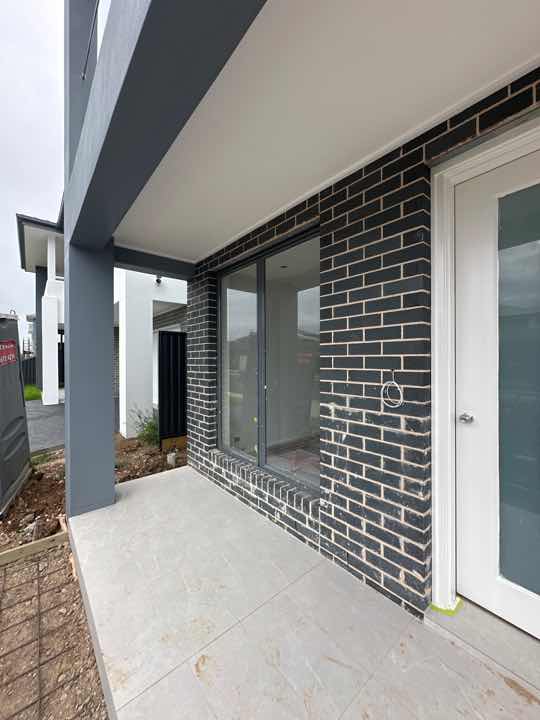
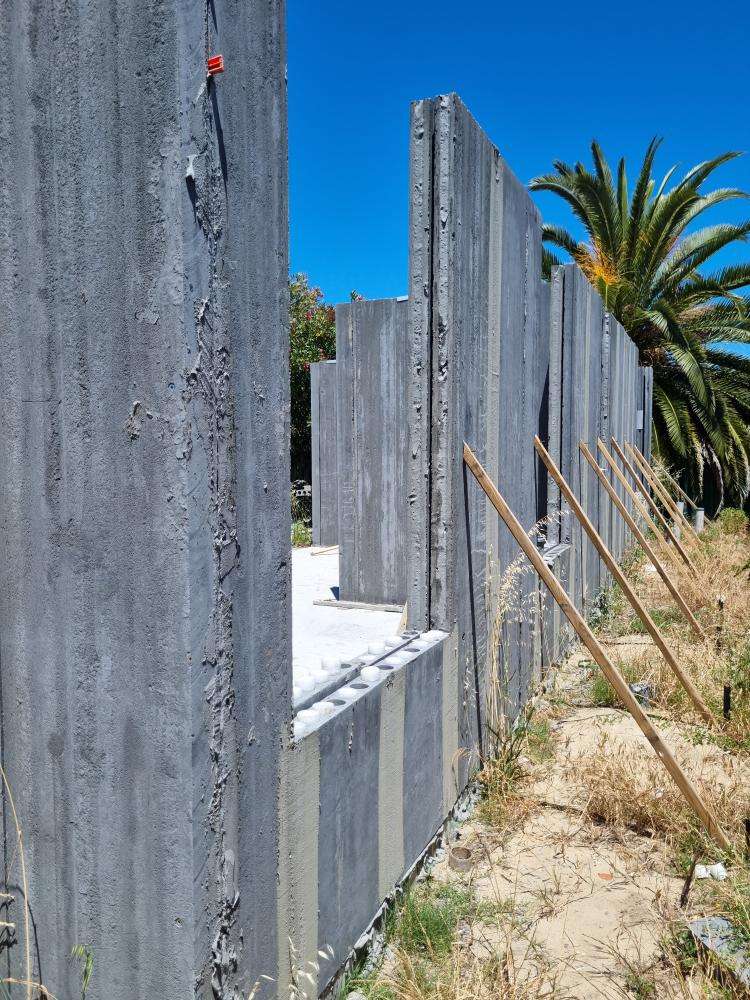
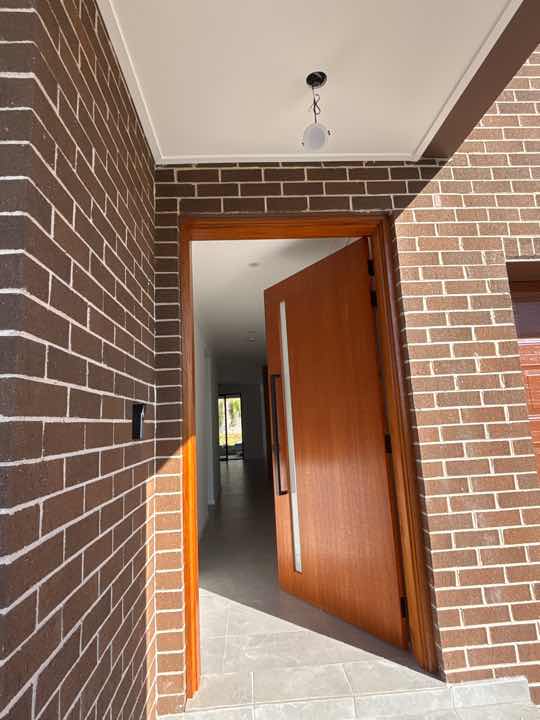
Real defects our inspectors have flagged
Why you might need this
- New home built 6–12 months ago, you have warranty rights and need to identify defects before the period expires
- Settlement cracking has appeared since handover and you need it documented
- Appliances or services have failed or show signs of failure within the warranty period
- Your building contract includes a specific defects liability period and you want to maximise its use
- Investor wanting to document property condition before the first tenancy lease ends
Stage pricing is confirmed at booking. The fee depends on the build stage, site access, and inspection scope. Use the guide price in the header as a starting point, then book online to confirm your quote.
The build sequence
Where this inspection sits in the build
Every stage inspection has a right moment. Here is the full sequence, with this inspection highlighted and when to book each of the others.
Stage 8 of 8 This inspection
Warranty Inspection
In the months after handover, before your warranty period closes
- When to book
- Book in good time before your warranty period closes. Your builder or contract sets the exact window.
- Why it matters
- The last window to put settling and movement defects back on the builder before the warranty closes.
View full 8-stage build sequence
-
- When to book
- Book as soon as your builder confirms the pour date. We inspect one to two days before the trucks arrive.
- Why it matters
- Once concrete is poured, the formwork, footings and reinforcement can never be checked again.
-
- When to book
- Book once the pour date is locked in. One visit covers the pre-pour check and the pour itself.
- Why it matters
- The one chance to check the slab while it is being placed, not after it has set.
-
- When to book
- Book for two or more days after the pour, before your builder starts framing or brickwork.
- Why it matters
- Once the walls go up, nobody can check the slab set-out or catch early cracking.
-
- When to book
- Book the day framing finishes, before any roof cover, cladding or plasterboard goes on.
- Why it matters
- Bracing, tie-downs and lintel sizing can only be checked now.
-
- When to book
- Book once the building is sealed and lockable: roof on, external doors and windows in, before internal fit-out begins.
- Why it matters
- Your last look at flashings, brick ties and waterproofing before the linings hide them.
-
- When to book
- Book as soon as your builder gives you the PCI date and time.
- Why it matters
- Defects documented at PCI are contract corrections. Miss them and they turn into warranty disputes.
-
- When to book
- Book once the builder confirms the PCI defect repairs are finished.
- Why it matters
- Independent confirmation that every PCI item was actually fixed before you accept the keys.
-
Stage 8 of 8 This inspection
Warranty Inspection
In the months after handover, before your warranty period closes
- When to book
- Book in good time before your warranty period closes. Your builder or contract sets the exact window.
- Why it matters
- The last window to put settling and movement defects back on the builder before the warranty closes.
The process
- 1
Book between 6 and 12 months after handover
The warranty inspection is most effective when conducted 6-12 months after handover. This gives enough time for settlement and service failures to emerge, while keeping the inspection within the builder's warranty period.
- 2
Inspector conducts a full scope assessment
Your SURE inspector assesses structural components to AS 4349.1 Annex A plus all fixtures, services, and appliances, including air-conditioning, garage door, and all installed services.
- 3
Same-day report delivered
A detailed report with photos and severity ratings is delivered the same day, ready to send to your builder as a formal warranty claim.
- 4
12 months free advice
Your inspector is available for questions about findings and remediation claims during the 12-month free advice period.
See exactly what you get before you book
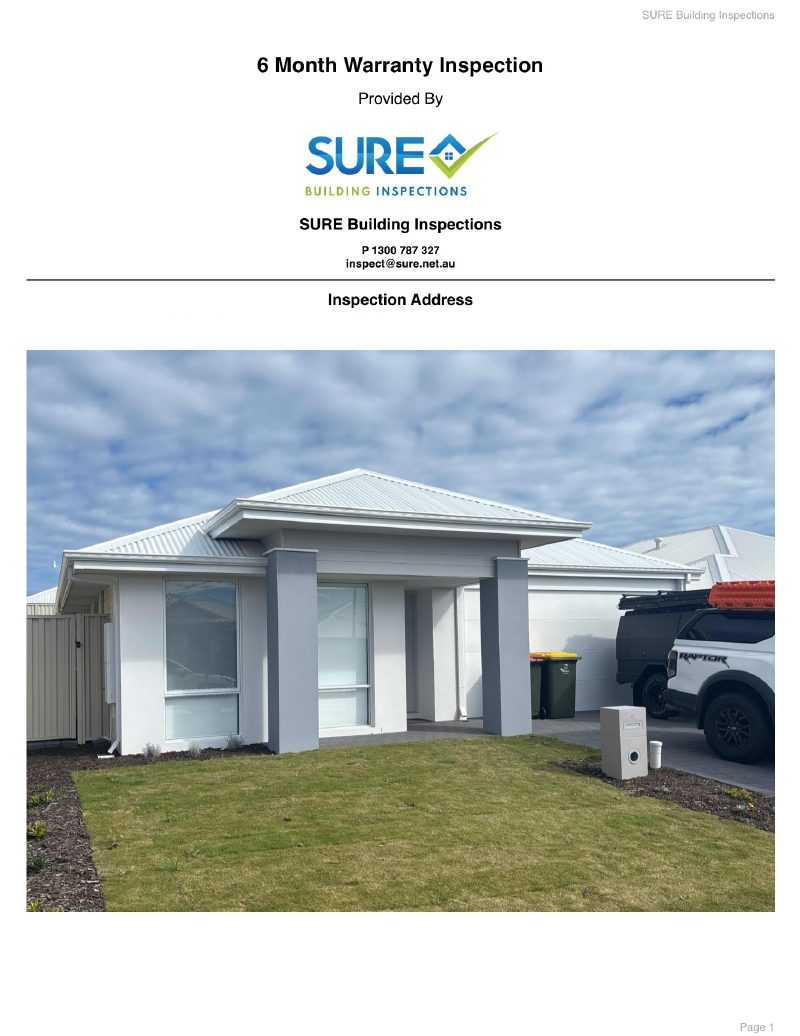
Our warranty inspection (brick veneer / timber frame) report includes annotated photos, severity ratings, AS 4349 references and actionable remediation advice. Written in plain language so you can act on it the day you receive it.
- Photo evidence per finding
- Severity rated: critical, moderate, cosmetic
- Australian Standards cross-referenced
- Remediation guidance you can quote
Common defects we find on warranty inspections
Patterns indexed across the Perth and Sydney corpus. These are the types of findings you might see in your own report.
External wall settlement cracking
Stepped or diagonal cracking in brickwork or render that emerges 6–12 months post-handover as foundations and soils equilibrate.
Failed waterproofing membrane
Shower and wet-area membrane failures that become evident once the property has been occupied and water-tested by daily use.
About a warranty inspection
Warranty periods by state
- Western Australia: 6–12 months after handover
- New South Wales: 13 weeks after handover
Please refer to your building contract, as the specific period applicable to your build may differ from the statutory minimum.
The Warranty Inspection is completed 6–12 months after a property was handed over to the client, identifying repairs required due to failure or settlement in the building while the builder’s warranty obligations are still in force.
The inspection is completed in accordance with AS 4349.1-2007 Annexure A with additional variations: air-conditioning, fixed appliances, garage door, and all other installed services are tested as part of the scope. The same-day report provides documented evidence for formal warranty claims with your builder.
The value of this inspection
Defects rectified under warranty cost you nothing. The same defects found after the warranty period closes are your financial responsibility. A SURE warranty inspection typically costs a few hundred dollars. If the report turns up repairs worth thousands, the inspection pays for itself many times over.
Why this inspection matters
The 6–12 month window after handover is when settlement cracking, drainage failures, and service defects typically become visible. A new home that looked complete at handover will have had time to move, settle, and reveal issues that weren’t apparent on the day you received the keys.
The timing is deliberate. Too early and settlement hasn’t had time to manifest. Too late and you may have passed outside the statutory warranty period, leaving you without recourse to require the builder to remedy defects at their cost. Once the warranty period expires, any rectification work is your financial responsibility. Booking the inspection in this window, while defects are visible and the builder’s liability is still active, is the only way to use the warranty entitlement you paid for when you signed the building contract.
What gets inspected
The warranty inspection covers the same scope as a full residential building inspection under AS 4349.1 Annexure A, plus all installed services: air-conditioning systems (tested), fixed appliances (tested), the garage door mechanism, and any other services installed during construction. Site drainage and external areas are assessed for signs of settlement or movement. Polarity is tested at all accessible power points.
Settlement cracking is assessed in context. Not all cracking after handover is defective, but cracking that has widened, cracking at structural junctions, or cracking accompanied by wall movement is documented and categorised. Your inspector can advise on which items are likely to be accepted as warranty claims and which may require further investigation.
You might also need
Before you book
When is the best time to book the warranty inspection?
Between 6 and 12 months after handover. This allows time for settlement cracking and service failures to emerge, while keeping the inspection within the builder's statutory warranty period.
What is covered by the builder's statutory warranty?
Statutory warranty periods differ by state and by contract. In Western Australia, the defect liability period is typically 6-12 months after handover. In New South Wales, it is typically 13 weeks. Your specific contract may set different timeframes. Your inspector's report provides documented evidence for warranty claims regardless of which state applies.
Does the warranty inspection cover structural defects?
Yes. The inspection is completed to AS 4349.1 Annexure A, which includes structural elements. Post-handover structural issues such as cracking, wall movement, or subfloor defects are assessed.
Can I use this report for a formal warranty claim?
Yes, the SURE Warranty Inspection report provides documented evidence of defects for use in formal warranty or defects liability claims with your builder or under the relevant statutory warranty scheme.
What happens after the warranty period expires?
Once the statutory warranty period expires, remediation becomes a civil matter. Conducting the inspection while within the warranty period is important, this is why timing matters.