
Building Inspections in Green Point, Central Coast

Common issues in Green Point
Green Point and surrounding suburbs
Tiles © Esri · Esri, HERE, Garmin, © OpenStreetMap contributors, and the GIS user community
Questions we hear about Green Point
Green Point is not on the water. Does that change the inspection?
It shifts the emphasis. Set back and up from the Brisbane Water inlets, most of Green Point reads as conventional suburban stock on sloping ground, so the questions are about how water crosses the site, not what the tide is doing. We look at fall away from the walls, retaining and cut-and-fill platforms, where the downpipes discharge, and what the garden has been allowed to do against the building. Salt-air corrosion on roofing and hardware still applies here, because estuary air carries well inland.
What causes cracking in the walls?
Most often ground movement. The clay-rich members of the Terrigal Formation weather into reactive soil across these slopes, and reactive soil swells when it is wet and shrinks when it dries, which moves a masonry wall with the seasons. Some of that is expected and is what articulation joints are for. What we look at is the pattern, the width, whether cracks step through mortar or run straight through bricks, and whether doors and windows still sit square. Where it looks structural, the report says to get an engineer in.
The garden is established and close to the house. Is that an issue?
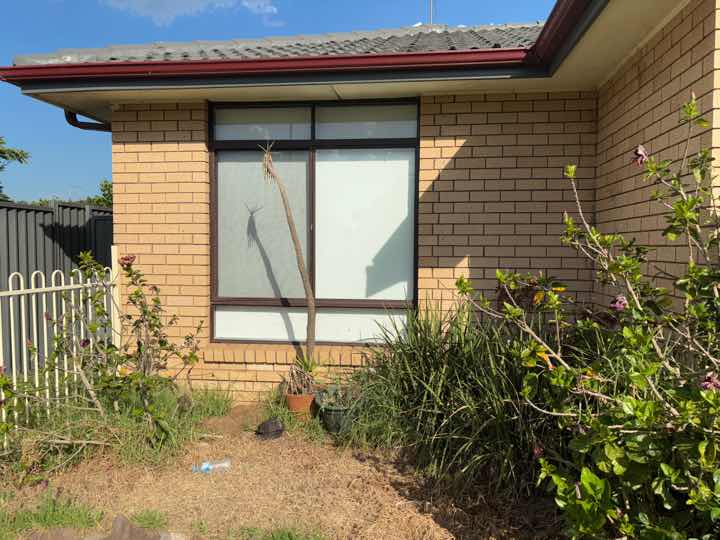
It is the most common thing we write up on blocks like these. Mulch and garden beds banked against the wall bridge the slab edge or cover the ant caps, timber edging and sleepers sit in damp soil, stumps get left in the ground after a tree comes out, and irrigation keeps one strip of soil permanently wet. None of that means there are termites. It means the conditions that attract them have been built into the landscaping, and most of it can be corrected cheaply once you know.
Where does the water from the air conditioner and hot water system go?
Worth asking, because in this area the answer is often nowhere useful. An air conditioner condensate line or a hot water relief valve that discharges onto the ground next to a wall keeps that patch of soil wet all year, which is exactly the condition that decays timber and draws termites. The same goes for a rainwater tank overflow that has never been connected to stormwater. We follow those discharges and note where they end up, because it is a cheap fix and an expensive problem.
What is checked on the roof and in the roof space?
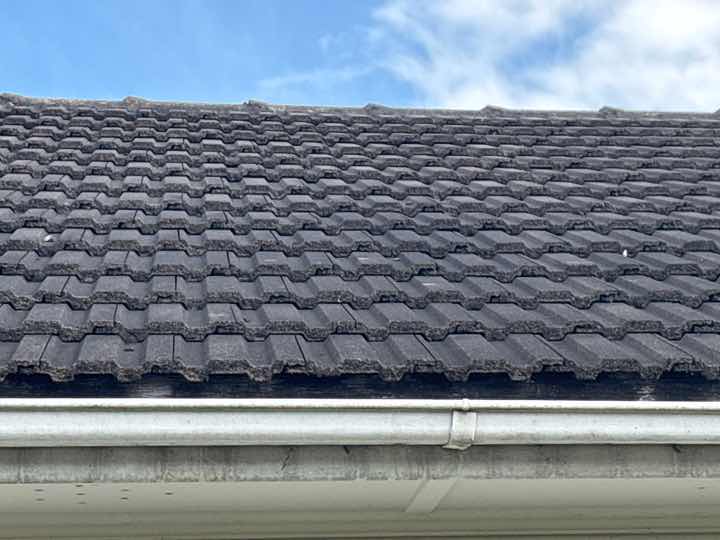
From the ground and from the roof where it is safe to get on it, we look at the covering, ridge capping and pointing, flashings, valleys, and gutter and downpipe condition. Inside, the roof void gets checked for daylight, water staining, sarking condition, framing that has been cut or altered, and insulation covering things it should not. Where there is no access hatch, or the void is too tight or unsafe to enter, the report records it as not inspected and says why.
Can I attend the inspection?
You are welcome to, and on a first home it is usually worth the time. Being there means you see the subfloor, the roof space and the parts of the block you would otherwise only read about, and you can ask about anything while we are standing in front of it. Access is arranged through the agent, so let us know at booking. If you cannot make it, the report does the same job, and calls about it are free for twelve months.
More areas near Green Point
Real defects our inspectors have flagged
Built to last. Inspected to be SURE.
One inspection, twelve months of advice, and the same person on the other end of the phone every time you call. That is the part you do not see on the brochure.
9,237 inspections · 242,618 defects found · Inspector-owned franchises