
Building Inspections in Currambine, Perth
Stock profile · ABS 2021 Census
What’s here in Currambine
- Separate houses
- 90.6%
- Semi-detached / townhouse
- 2.7%
- Flats & apartments
- 6.7%
2,415 occupied private dwellings
Local profile · ABS 2021 Census
Who lives in Currambine
- Median age
- 40yrs
How Currambine
was built
Currambine is a compact three-square-kilometre suburb that developed almost entirely in response to a single piece of infrastructure: the Currambine railway station, which opened in 1993 as the northern terminus of the then-Joondalup Line. Before the station, the land was classified as State Forest, and rezoning of key parcels from forestry to residential began in April 1990 to enable the first subdivisions. By the mid 1990s, the suburb was filling rapidly with double-brick homes on engineered concrete slabs, the standard construction for coastal sand sites in the City of Joondalup. The suburb's most influential growth period ran from 1993 through to around 2006, producing a largely uniform housing stock across its estate streets. Currambine sits between Marmion Avenue to the west, Connolly Drive to the east, Burns Beach Road to the north, and Shenton Avenue to the south, a tight boundary that has kept the suburb compact and prevented the sprawl characteristic of later northern growth corridors. The station remains a working commuter hub despite being bypassed as terminus by Butler in 2014 and Alkimos in 2024. Currambine Central Shopping Centre anchors the local retail offer, and the suburb's proximity to Joondalup city centre means residents access the full range of services within a five-minute drive. The oldest Currambine homes are now approaching 30 years old, reaching the threshold where original roof mortar, wet-area waterproofing, and external paint systems require systematic assessment.
What makes Currambine worth it
-
Currambine station to Perth CBD in 30 minutes
The Yanchep Line stop at Currambine provides a direct, frequent service to the Perth CBD. The station is embedded in the suburb rather than on its edge, making it genuinely walkable from most streets.
-
Joondalup Health Campus ten minutes south
One of WA's largest public and private hospital campuses, with a 24-hour emergency department, sits a short drive south in the Joondalup city centre, giving Currambine unusually good acute health access for a suburban address.
-
Lakeside Joondalup and Currambine Central for retail
Currambine Central provides everyday supermarket and specialty retail within the suburb, while Lakeside Joondalup, one of WA's largest shopping centres, is a five-minute drive south for major retail, dining, and services.
-
Compact suburb with no through-traffic
Currambine's tight boundary and cul-de-sac estate layout means minimal through traffic, low noise levels, and a pedestrian-friendly street environment that is difficult to find in larger suburban estates.
-
Burns Beach and Iluka coast within ten minutes
Burns Beach Reserve and the coastal strip north of Currambine provide beach access, a surf break, and foreshore walking paths within a short drive, without the weekend parking congestion of beaches closer to the CBD.
Top defects in Currambine
Five issues we find most.
From 20 SURE inspections in Currambine. Each defect is anonymous. No property is identified.
21 defect types indexed across 20 inspections
Meet Kim Steele

Kim Steele inspects Currambine and the wider Joondalup northern corridor. Mid-1990s to mid-2000s double-brick estate stock on Tamala Limestone is the dominant pattern in his Currambine work. - Territory: Perth North / Northern Suburbs - Experience: 10+ years - Specialisations: Double-brick estate construction, Tamala Limestone foundation behaviour, new-build defect identification - Direct line: 1300 787 327 Kim typically responds within 2 hours on business days.
Local risks in Currambine
Currambine developed almost entirely between 1993 and 2006 in response to the opening of Currambine Station, producing a remarkably uniform housing stock across its estate streets. The dominant construction is double-brick on engineered concrete slabs, which behaves differently from brick-veneer-on-timber-frame. Double-brick doesn't carry the same termite pathway risk through the frame, but slab-edge exposure and sandy soil movement still matter because Tamala Limestone bedrock with shallow coastal sand overburden responds to irrigation and tree-root moisture changes the same way across the corridor. At 20 to 30 years old, original Currambine homes are entering the window where systematic assessment adds real value: roof tile mortar on concrete tile roofs is reaching end-of-service life, wet-area waterproofing on original bathrooms installed in 1995–2000 is at or beyond design life, and external render on double-brick homes shows first-generation cracking from differential movement between the sand overburden and the limestone base. Repair cost context: wet-area waterproofing rectification (strip-back, membrane, retile) typically runs $4,000–$7,500. Roof tile mortar repointing on a standard Currambine home runs $2,200–$4,500. External render patch-and-paint on a double-brick elevation runs $1,500–$3,500. Downpipe disconnections run $250–$600 per downpipe to reconnect to stormwater.
Common issues in Currambine
Inspecting
Currambine homes
Every SURE inspection in Currambine covers structural, moisture, roof, drainage, and timber pest scope. With the suburb's housing stock now 20 to 30 years old, original materials are at the age where systematic assessment adds real value before purchase. In our 7 Currambine inspections, the two most common findings are external wall cracking due to settlement and trees in close proximity to the dwelling. Tamala Limestone bedrock with shallow sand overburden means foundation behaviour here mirrors Joondalup, and inspectors pay particular attention to slab-edge exposure, downpipe stormwater connections, and roof flashing condition on tiled roofs approaching 30 years of age.
DefectIndex
SURE has indexed 21 defects across 20 inspections in the Perth region. That data underlies every finding we report in Currambine.
Currambine and surrounding suburbs
Tiles © Esri · Esri, HERE, Garmin, © OpenStreetMap contributors, and the GIS user community
Questions we hear about Currambine
Are Currambine homes from the 1990s worth inspecting before purchase?
Yes. Homes from the mid 1990s are now approaching 30 years old, which is the age at which original roof tile mortar, wet-area waterproofing, and external render begin reaching end of service life. External wall cracking from settlement is the most common finding in our Currambine reports. An inspection identifies which of these issues are cosmetic and which require immediate rectification, and the 12 months FREE advice that comes with every SURE report supports you through the first year of ownership.
What does Tamala Limestone mean for Currambine foundations?
Tamala Limestone is a stable bedrock, but the shallow coastal sand that sits over it responds to moisture changes from irrigation, leaking pipes, or tree root activity. When moisture is drawn unevenly from the sand under a slab edge, differential movement follows. What inspectors watch for is not the limestone itself but the condition of the slab perimeter, whether it is exposed for visual inspection and whether tree roots are within reach of the footings.
Is there a termite risk in Currambine?
Concealed slab edges and garden beds banked against the brick base course are the primary termite risk factors in Currambine. The sandy soil here does support subterranean termite activity, and homes where the slab edge is covered by paving, mulch, or garden beds cannot be properly assessed for termite entry points without removing those materials. Inspectors document any areas where assessment was restricted.
What is the turnaround on a report and what follow-up is included?
Reports are usually delivered the same day as the inspection, subject to access and availability, in full PDF with photographs and severity ratings. If defects are found you receive 12 months FREE advice from your inspector, which covers contractor quote interpretation, re-inspection after rectification, and guidance on any negotiation with the vendor.
Who carries out inspections in Currambine?
Kim Steele covers Currambine and the wider Joondalup and northern corridor. Kim holds CPPHON4013 and CPPUPM3008, has more than a decade of residential building experience, and is very familiar with the mid-1990s to mid-2000s double-brick estate homes that make up almost all of Currambine's housing stock. Every booking routes directly to Kim.
What are the most common building defects found in Currambine?
Based on an indicative sample of 20 SURE inspections carried out in Currambine, the most common defects we identify are: External Wall Cracking due to Settlement, Timber in Contact with Ground, Trees in Close Proximity to Dwelling, Cracked Roof Mortar, Nail Popping in Hallway Ceiling.
Are termite or timber pest concerns common in Currambine?
Yes. Across 20 inspections in Currambine, the most common timber-pest findings include Timber in Contact with Ground, Slab Edge Concealed by Soil, Paving, or Raised Garden Beds, Concealed Internal Wall Areas (Termite Risk). We recommend a timber-pest inspection alongside any pre-purchase building inspection here.
What structural issues are typical for homes in Currambine?
Common structural findings we record in Currambine include External Wall Cracking due to Settlement, Chemical Delignification of Roof Frame. Each finding is reported alongside remedy recommendations and covered by 12 months free advice.
Is moisture a concern in Currambine homes?
Excessive Moisture Readings and Deteriorated Splashback Sealant are among the moisture-related findings recorded across 20 inspections in Currambine. Our inspectors use moisture-meter readings to quantify any issue they detect.
Book an inspection
in Currambine
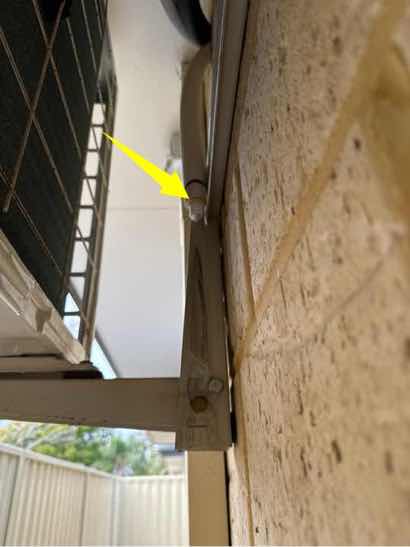
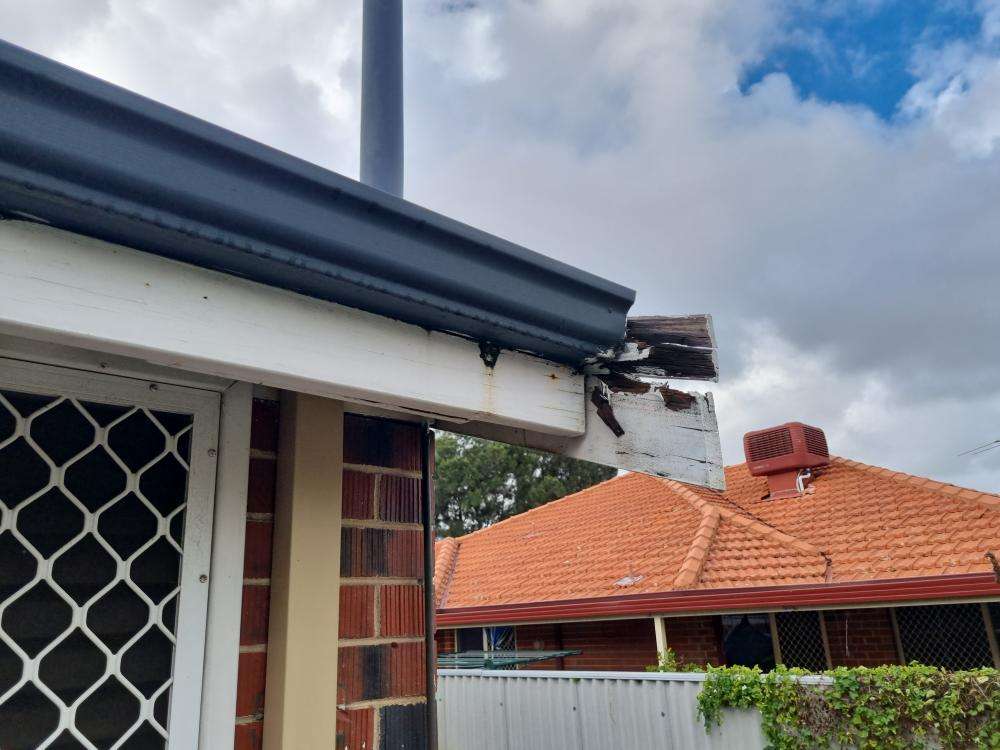
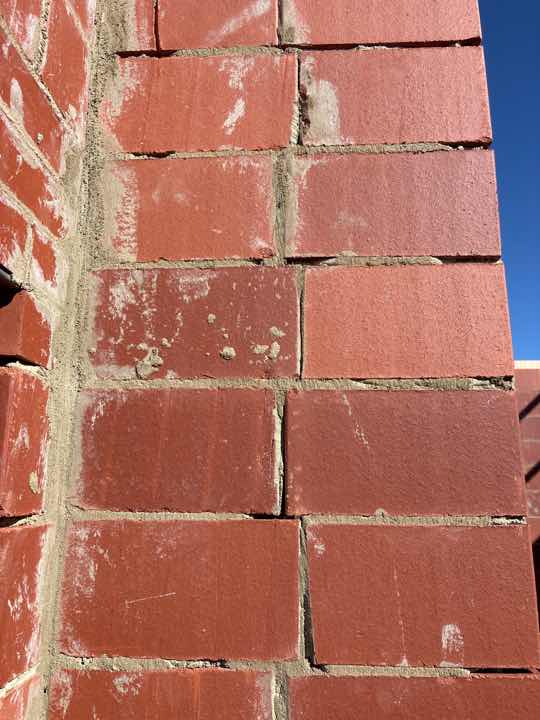
Real defects our inspectors have flagged
Built to last. Inspected to be SURE.
One inspection, twelve months of advice, and the same person on the other end of the phone every time you call. That is the part you do not see on the brochure.
9,237 inspections · 242,618 defects found · Inspector-owned franchises
Your free area report
Get your free area report in 30 seconds
A suburb-specific PDF with defect profiles from real SURE inspections in Currambine, price trends, school data, and era-aware inspection guidance, emailed within two minutes. Just 4 fields.
- Defect profile: top issues found in real SURE inspections in Currambine.
- Price trends & school data: local context to inform your decision.
- No paywall. No commitment. Just 4 fields, 30 seconds.